
Knox County Parole Versus Probation
Parole and probation come from different authorities. The Texas Board of Pardons and Paroles decides parole and mandatory-supervision cases. After prison release, the TDCJ Parole Division manages that supervision. Probation, formally called community supervision, is imposed by a court and managed through a Community Supervision and Corrections Department. A person may also leave Knox County Jail on bond or after time served with neither status.
| Issue | Parole | Probation |
|---|---|---|
| Source | Board decision after TDCJ confinement | Court community-supervision order |
| Local route | Wichita Falls District Parole Office, Region V | Baylor/Cottle/King/Knox CSCD |
| Key record | Board result, release record, and supervision file | Sentencing, modification, discharge, or revocation order |
| End point | Discharge from parole or mandatory supervision | Court discharge or revocation |
Verify Knox County Post-Release Supervision
First establish whether the person served a state-prison sentence or received a Knox court order. TDCJ's public inmate search covers current prisoners, so a released parolee may no longer appear. A missing result cannot prove discharge. Use identifiers such as full name, date of birth, TDCJ or SID number, and the Knox case number when available.
- Check the judgment or TDCJ history to identify parole, mandatory supervision, or community supervision.
- For a person still confined, review TDCJ details and call the Board at 844-512-0461 for review status.
- After an approval, call TDCJ release status at 512-406-5202. A favorable vote is not an actual release.
- For parole after release, consult the official county assignment directory and confirm the current office.
- For probation, obtain the sentencing and later orders through the Knox court record, then verify the current CSCD assignment.
Knox County Parole Office Route
Knox County has no Knox-named parole office. The state county cross-reference assigns Knox to the Wichita Falls District Parole Office in Region V. Office assignment can follow an approved residence rather than the county of conviction, so call before relying on the directory entry. Personal address and supervision details may be restricted.
3100 Seymour Highway, Suite 118
Wichita Falls, TX 76301
940-322-2721
The TDCJ county assignment directory is the controlling source for the Knox route. The successful directory capture below shows why a search for a Knox-named office would fail.
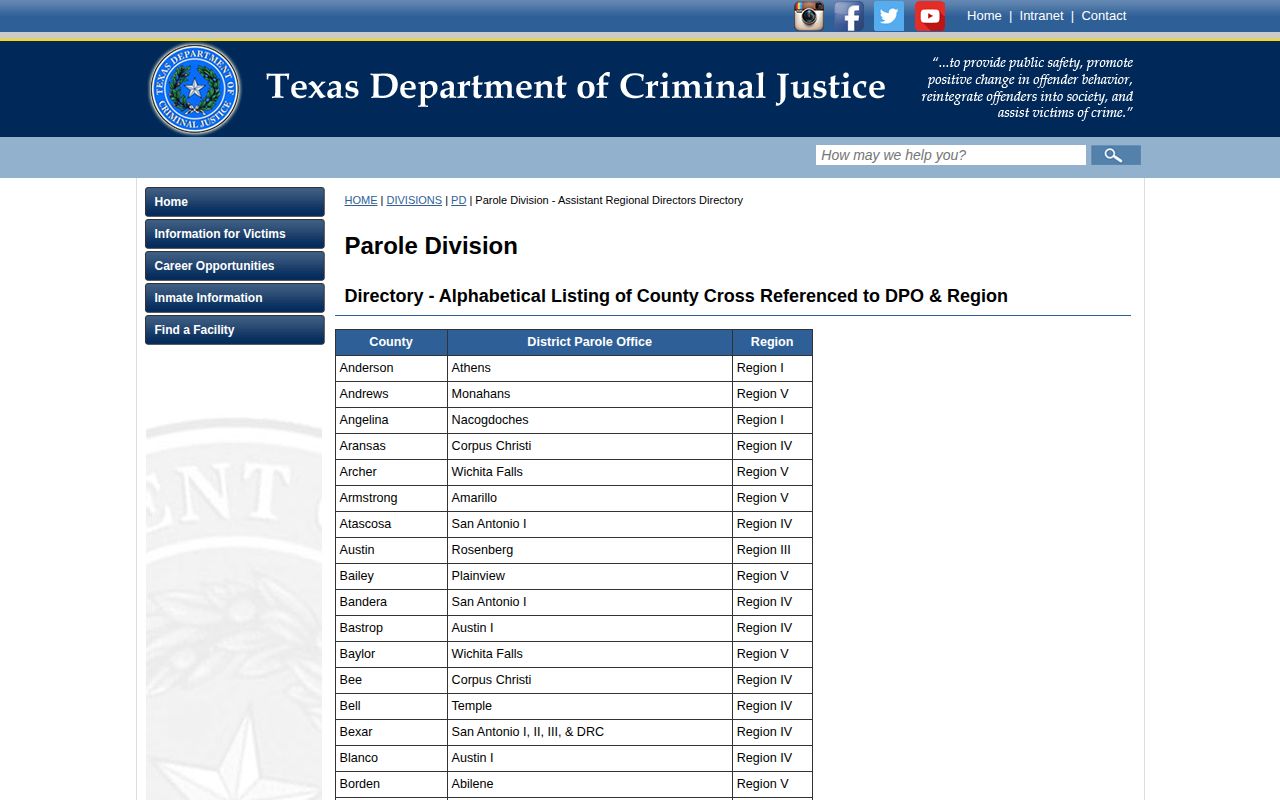
The listing is a routing fact, not proof that a named person is supervised there. Confirm the current assignment with the office.
Knox County Supervision Violations
Conditions may govern reporting, travel, treatment, residence, and other conduct set by the Board or court. The signed order or release certificate controls. A missed appointment alone is not a completed revocation. TDCJ defines an absconder as a person on parole or community supervision who fails to report and cannot be located, and a warrant may follow. Confirm an alleged warrant with the responsible agency and the court or Board process.
Texas IVSS-Counties can send some supervision and custody-change notices, but it is not an official record. Knox participation must be checked rather than assumed. A portal notice can prompt a call; it does not replace the agency decision or warrant record.
Revocation is the formal act that ends a supervision grant and can return a person to custody. For parole, Board and TDCJ records control that process. For probation, the Knox court docket and signed revocation order control. An arrest, alleged violation, or notice may begin an inquiry but does not establish the final result.
How Knox County Supervision Ends
Leaving prison is not the same as completing supervision. Parole or mandatory supervision can continue after physical release until discharge, maximum expiration, or another lawful end. Probation ends through the court record, not by inference from a jail release date. Request the relevant TDCJ discharge record or the Knox discharge order. The Knox County released-inmate search and records guide explains how to pair that record with the original custody exit.
For a state record, provide full name and TDCJ number to inmate information staff. Without the number, use exact date of birth or approximate age and county of conviction. A formal TDCJ Public Information Act request is the stronger route for an actual discharge document. For probation, ask the combined Knox County and District Clerk for the sentencing order and any modification, revocation, or discharge order.
Knox County Parole Review Timing
Texas does not publish an ordinary person-by-person parole hearing calendar. Routine cases are reviewed as files, and panel members vote individually. TDCJ generally identifies cases about six months before initial eligibility and four months before a later review. A three-member panel decides the case when two votes agree. Interviews are discretionary.
Approval codes can call for release when eligible, a later month, or a program before release. Denials can set a new review month or require service of the balance, subject to any applicable mandatory-supervision path. These results are decisions, not gate times. Processing, a detainer, or new information may still change the outcome.
Four dates should remain separate: eligibility, the panel vote, scheduled release, and actual prison exit. Call the Board at 844-512-0461 for review status. After approval, call 512-406-5202 for release processing. A scheduled location can change as records, residence approval, programs, and detainers are reviewed.
Which Knox Supervision Office Applies?
This local split is the key Knox County detail. Parole and mandatory supervision go through TDCJ's Wichita Falls district route. Court-ordered probation goes through the Baylor/Cottle/King/Knox CSCD configuration. Calling the wrong system can produce a false no-record answer. Start with the release type shown on the judgment or TDCJ record, then use the matching office.
The CSCD path is tied to the sentencing court, while parole routing may follow the approved residence. Neither directory is a public list of every supervised person. Ask for a specific official record and verify identity with stable case or corrections numbers. This keeps an office assignment from being mistaken for personal supervision proof.
Knox County Probation Records
Probation begins with a court order, so the criminal case file is the most reliable starting point. The combined Knox County and District Clerk is the records doorway. Identify the defendant, case number if known, and a practical date range. Request the judgment and sentence, the community-supervision order, later modification or revocation orders, and the final discharge order when one exists.
A docket line may abbreviate the action. Obtain the signed order when the exact terms or outcome matter. The Baylor/Cottle/King/Knox CSCD grouping can confirm its own supervision route, but the court record remains strongest for what the judge imposed. A jail release timestamp proves the physical exit only. It does not prove that probation began, continued, or ended.
Probation can be modified, revoked, or discharged through later court action. Preserve each date and label. If the person is arrested again, do not infer revocation from the arrest. Check for the signed order and any new custody record. This method separates an allegation from a completed court decision and prevents a past Knox release from being treated as current supervision status.