
Knox County IVSS Replaced VINELink
Texas replaced county VINE/VINELink with Texas IVSS-Counties on September 1, 2025. It provides the county jail and court notification layer. The Texas OAG lists booking, release, court-event change, death, escape, and transfer to TDCJ among possible notices. It is not an official record, and no authoritative source confirmed Knox participation. Check the portal or support before relying on coverage.
The official IVSS search page is the current starting point:
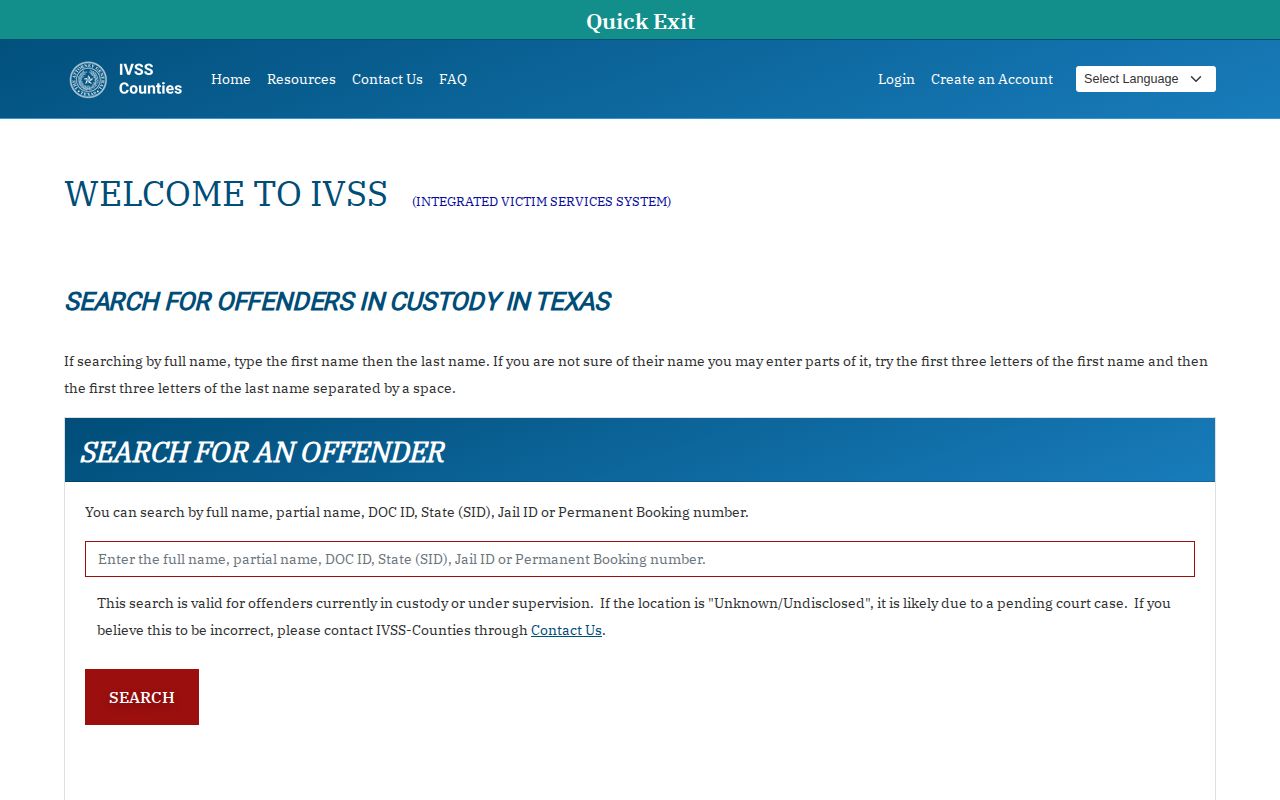
The captured page supports a one-person search, not a permanent Knox County released-inmate list.
Language options and several delivery methods make the service useful for ongoing notification, but search access and alert registration remain separate tasks. A person can search without creating an account. Registration matters when future changes are the goal. Before saving a record, verify the county, facility, and identifiers. This avoids attaching alerts to a same-name person in another Texas jail and keeps the later notice tied to the intended Knox County custody episode.
Search Knox County IVSS Records
Search by full first and last name, or use the first three letters of each name separated by a space. Identifier choices include DOC ID, State or SID, Jail ID, and Permanent Booking Number.
- Enter the name or identifier and complete reCAPTCHA if shown.
- Select Search and compare all plausible results.
- Match the facility and identifiers before opening a record.
- Do not treat an unknown location as a release.
- Preserve an alert, then confirm it with the custodian.
What Knox County IVSS Shows
IVSS can match a current record and issue custody-change notices. Its own warning controls how results should be read.
| Field | What it establishes |
|---|---|
| Facility and identifiers | A way to check the person and custodian |
| Custody or supervision match | A current system report, subject to confirmation |
| Release or transfer notice | An alert event to preserve and verify |
| Unknown location | Not proof of release |
| No result | Not proof of discharge |
Register for Knox Release Alerts
Registration attaches notification choices to the selected record. Current choices include Email, Text, Phone, and TTY.
- Select the correct person and notification action.
- Use the IVSS registration page.
- Enter email, password, and a security answer.
- Select contact channels and after-hours settings.
- Submit and finish account verification.
- Manage contacts, paused notices, preferences, and history in the account.
IVSS defines after hours as 7 p.m. to 7 a.m. Registration is confidential, and names may be omitted, though email is required.
Knox County IVSS Limits
People no longer in custody may not appear. IVSS is not the BOP locator, ICE locator, or a historical TDCJ discharge search. Knox participation is not assured merely because the portal is statewide.
For state prison, TDCJ's public locator includes current inmates only. Use phone, email, or a Public Information Act request after release. For federal custody use BOP, and for immigration custody use ICE ODLS.
Why Old Texas VINELink Steps Fail
Existing VINE registrations migrated to IVSS, but returning users must update credentials and review preferences. Older directions requiring a four-digit phone PIN describe the former system. The current registration screen does not show that PIN workflow.
If account creation is unavailable, call IVSS support at 866-268-8959. Preserve the notice, then use the Knox County release-record path for official confirmation.
Knox VINELink Transition to IVSS
The Texas Attorney General's notification page controls the statewide change. VINE ended as the county platform on September 1, 2025. Existing registrations transferred, while users must update passwords and review alert choices. Phone and text notices continue through IVSS. TDCJ notifications remain a separate path for state-prison custody.
The OAG lists booking, release, court-event change, death, escape, and transfer to TDCJ among possible alerts. These labels matter. Transfer means custody moved, not that the person returned home. Death and escape can also remove someone from an ordinary custody view without being release.
The official Texas transition notice documents the change:
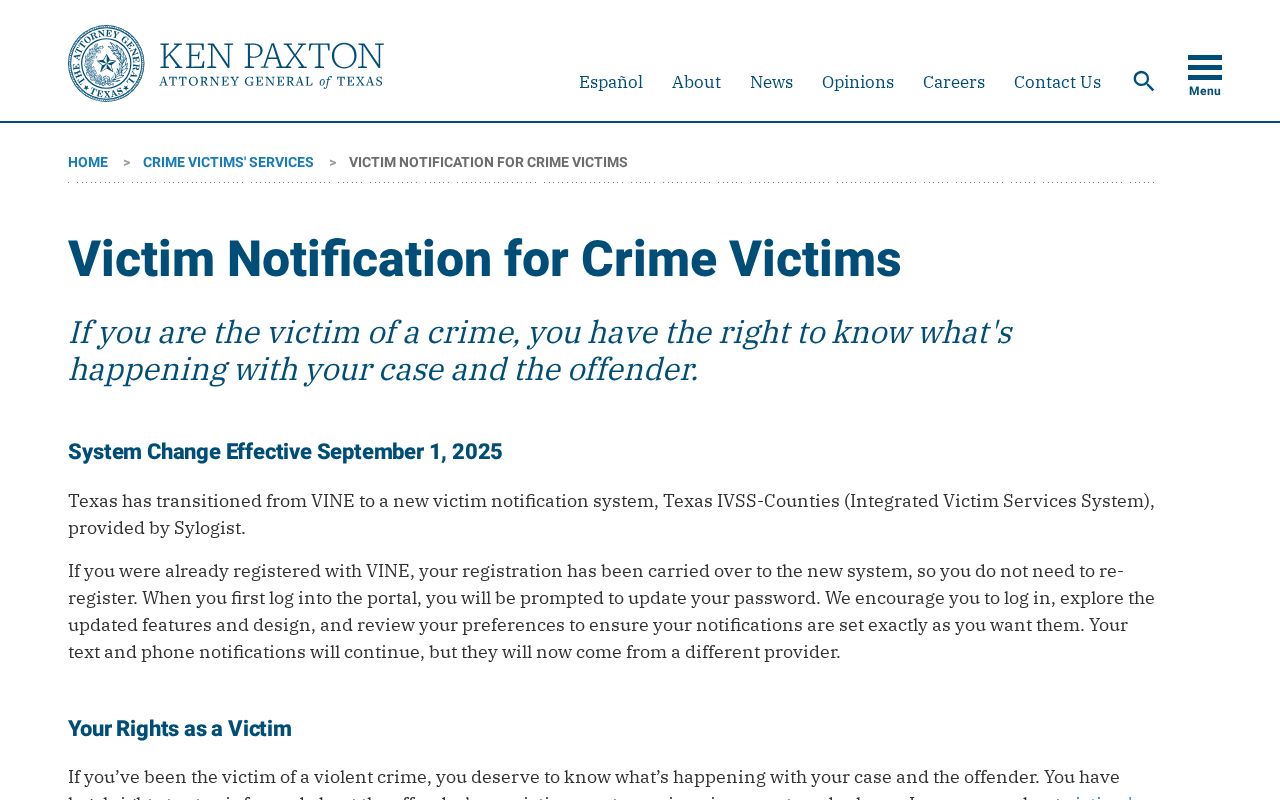
The capture confirms why current Knox instructions use IVSS rather than a legacy VINELink account.
Match Knox County IVSS Identities
Name-only searching is risky. Use full name, aliases, date of birth, Jail ID, Permanent Booking Number, DOC ID, or State and SID number when available. If records look alike, compare the facility and stable identifiers before choosing one. Partial names broaden results but raise the chance of selecting another person.
Keep the check narrow. Record the identifier used, facility label, event label, and date checked. If IVSS and the sheriff disagree, rank each source by what it proves. The Knox jail release entry is strongest for the physical exit. A signed court order is strongest for the legal disposition. IVSS is evidence that its alert system reported an event.
Booking date, transfer date, projected date, scheduled date, actual release date, and supervision discharge date are not synonyms. Preserve the portal's label and ask whether the next event was community release, TDCJ commitment, another county, federal pickup, or immigration custody.
Knox IVSS Registration Choices
The current page asks users to choose County or Out of State, supply email and password, and set a security question. First and last name can be omitted, but email is needed. Contact choices can be changed later, and notification history remains available through the account.
Email creates a notice that can be preserved. Text gives a quick prompt. Phone and TTY support call delivery. After-hours controls reduce unwanted overnight contact while keeping the registration active. Keep contact details current so failed delivery is not mistaken for no event.
The official IVSS registration screen shows the current options:
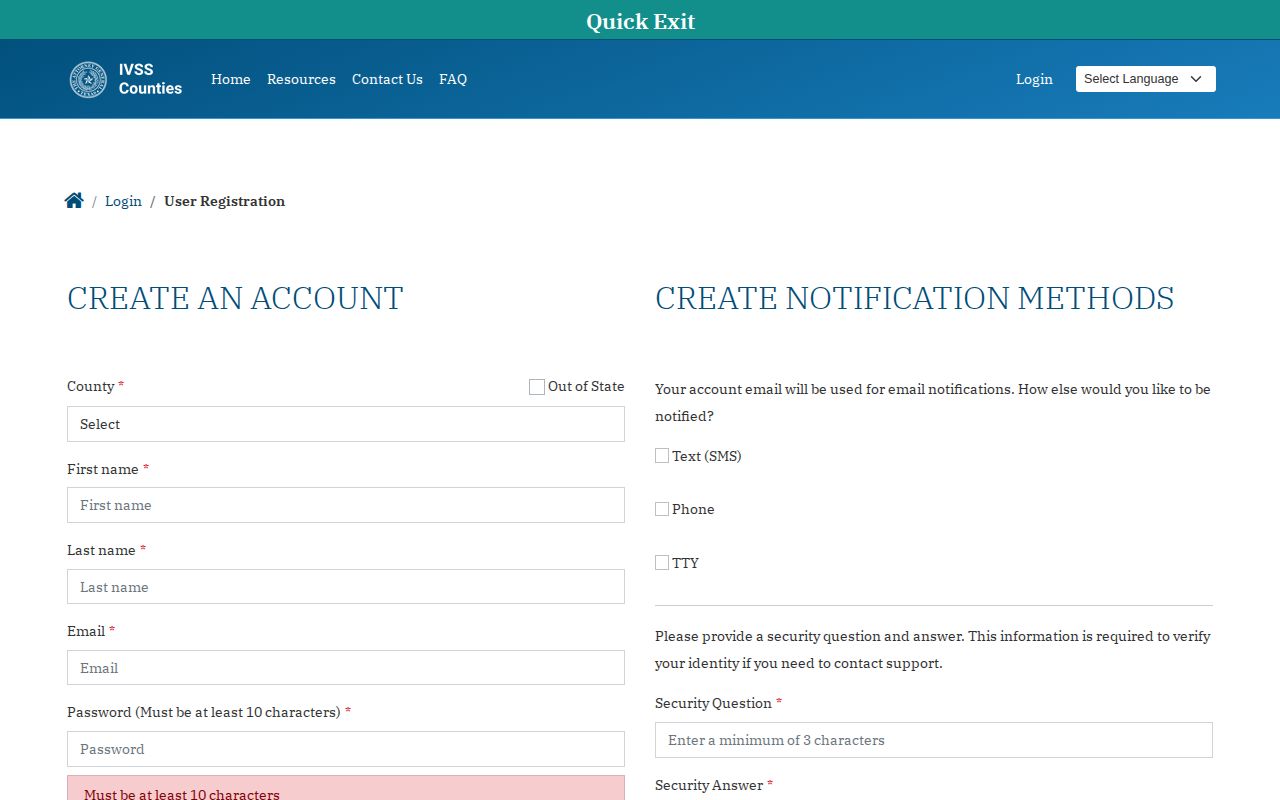
The screen also shows why old four-digit acknowledgment PIN directions no longer match the Texas workflow.
Knox IVSS No-Result Meaning
A no-result can mean the person left custody, Knox does not participate for that record, an identifier differs, or the portal does not cover the custodian. Spelling, a changed surname, and data delay also matter. None proves release.
Call Knox County Jail with full name, date of birth, and approximate booking date. Ask whether its record says held, released, or transferred. Follow with a written request for booking and release times, release authority, and destination. Then obtain the matching court order from the combined County and District Clerk.
If Knox reports a TDCJ transfer, use the live TDCJ search. It includes only current TDCJ inmates, updates on working days, and is at least 24 hours old. After discharge, use TDCJ information staff or a formal record request. A vanished result is not an actual discharge record.
Knox Release Alert System Boundaries
IVSS does not replace federal or immigration systems. A sentenced federal prisoner can appear in the BOP locator. A past BOP release date shows BOP custody ended, but another hold or federal supervision may remain. A person held by USMS before BOP admission may require the federal docket or a record request.
Use ICE's Online Detainee Locator when the sheriff record names an ICE handoff or immigration detainer. That handoff ends the Knox episode but is a transfer, not release home. An ICE no-result also needs follow-up because the locator has limited current and recent-release scope.
IVSS says status changes update throughout the day, yet disclaims official-record status and warns that people no longer in custody may not appear. The safe use is clear: register for a prompt alert, preserve it, identify the agency, and confirm the event through that agency's record.
Confirm Knox County Release Notices
When an alert says release, save the message with its timestamp, identifier, facility, and event label. Then call the named agency. For Knox County Jail, ask whether the completed entry says release to the community or names a receiving custodian. Release on bond leaves the case active unless the court says otherwise. Time served ends that custodial term, but another warrant may still control movement.
Request the written record after the call. Give full name, date of birth, booking number if known, and an approximate date range. Ask for booking and release timestamps, reason or authority, destination or receiving agency, charges, and bond fields. A phone answer helps route the request. The written record gives a stable basis for the event.
Match the event to the court file. A bond order explains why pretrial release was allowed. A dismissal or acquittal resolves a charge but may not give the precise jail exit time. A judgment and sentence explain commitment or time served. If records conflict, check for a second case, warrant, detainer, or same-name mismatch.
For a TDCJ alert, separate parole eligibility, a Board vote, a Scheduled Release Date, and actual release. Eligibility permits consideration. A favorable vote can still require a program, records audit, residence approval, or detainer resolution. Scheduled fields may change. TDCJ's completed release or discharge record is the final confirmation.
Keep later supervision separate as well. Parole and mandatory supervision begin after prison release and can continue until discharge. A Knox court may instead impose probation, which is managed through the Baylor, Cottle, King, and Knox CSCD arrangement. An old release notice cannot prove that either form of supervision ended. Obtain the later discharge, revocation, or court order from the agency that issued it. This final check prevents a true custody alert from being stretched into an unsupported claim about current legal status.